Hari ini Indonesia genap 81 tahun merdeka. Tapi ada satu pertanyaan yang rasanya perlu kita jawab dengan jujur:
merdeka bergerak, sudahkah kita?
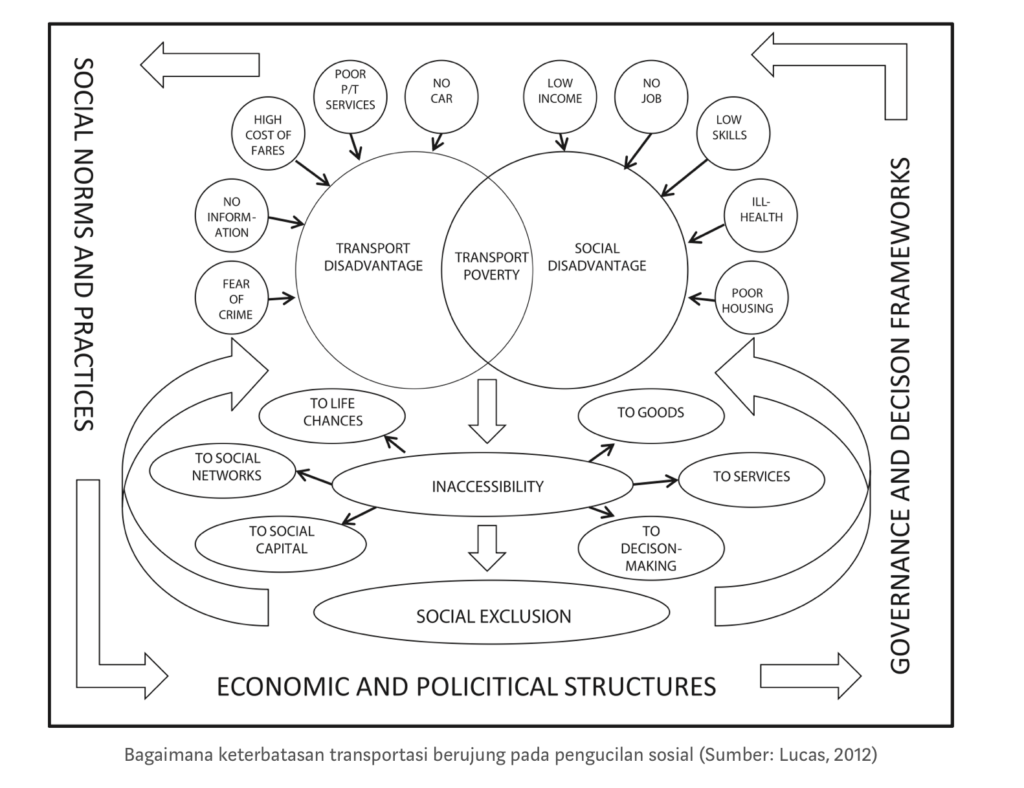
Mobilitas bukan kemewahan. Kemampuan untuk berpindah dari satu tempat ke tempat lainnya, untuk bekerja, untuk pergi ke sekolah, mengakses layanan kesehatan, atau sekadar berinteraksi dengan teman, adalah kebutuhan dasar dari manusia. Karen Lucas, merumuskannya lebih jauh: keterbatasan mobilitas bukan hanya soal tidak bisa bepergian kemana-mana, tapi soal tidak bisa ikut serta dalam pasar kerja, dalam layanan publik, bahkan dalam kehidupan sosial dan politik[1]. Ketika seseorang tidak bisa bepergian, ia secara perlahan tersingkir dari berbagai kesempatan yang seharusnya menjadi haknya sebagai warga negara.
Apabila kita menggunakan kerangka tersebut, maka kemerdekaan bermobilitas bukan hanya sekadar isu tentang infrastruktur. Ia adalah isu tentang keadilan. Dan sayangnya, keadilan itu masih terasa jauh di angan-angan.
Dua lapis ketidakmerdekaan
Permasalahan mobilitas di Indonesia memiliki dua wajah yang masih berkaitan dan saling memperparah satu sama lain.
Wajah pertama adalah tentang daya beli. Rata-rata warga di Indonesia menghabiskan sekitar 12.46% dari total pengeluaran hidupnya untuk keperluan transportasi, melampaui ambang batas ideal yang seharusnya tidak lebih dari 10%[2]. Artinya, sebelum kita berbicara transportasi nyaman atau tidak, banyak warga yang sudah tersengal sekadar untuk menanggung ongkos transportasi itu sendiri.
Bayangkan seorang buruh harian di pinggiran kota, dimana sekarang pekerja informal justru mendominasi struktur pekerja di Indonesia[3], harus menghabiskan seperdelapan penghasilannya hanya untuk pulang-pergi bekerja. Atau seorang ibu rumah tangga yang membatasi pergerakannya bukan karena tidak perlu keluar, tetapi karena setiap perjalanan membawa konsekuensi ekonomi yang tidak bisa diabaikan dalam perhitungan sehari-hari mereka. Bagi mereka, tidak bepergian bukan karena pilihan tetapi karena terpaksa.
Wajah kedua adalah soal absennya pilihan bahkan sejak awal. Di banyak wilayah Indonesia, pilihannya sederhana saja: kendaraan pribadi, atau tidak bisa kemana-mana. Layanan angkutan umum yang andal, terjadwal, dan terjangkau bukan barang yang bisa ditemukan di kehidupan sehari-hari. Bukan hanya di luar kawasan perkotaan utama Indonesia, bahkan di kota-kota tier kedua layanan ini masih menjadi barang langka.
Yang membuat kedua ketidakmerdekaan ini menjadi perangkap adalah strukturnya yang membentuk sebuah lingkaran tidak berujung. Untuk mengakses kendaraan pribadi, tentu diperlukan kapital untuk membelinya, untuk mengisi bahan bakarnya, serta untuk perawatannya. Bagi mereka yang tidak terlayani angkutan umum dan tidak punya akses terhadap kendaraan pribadi, hasilnya adalah ketimpangan yang berlapis: tersisih dari akses, tersisih dari pilihan, dan tersisih dari kesempatan.
Jakarta: Refleksi dari yang terbaik
Apabila kita ingin melihat seberapa jauh kita dari “merdeka bermobilitas”, Jakarta bisa jadi refleksi yang paling mudah sekaligus paling ironis, justru karena ia adalah kota dengan infrastruktur transportasi paling mumpuni di Indonesia.
Jakarta saat ini sudah memiliki jaringan transportasi berbasis rel yang cukup lengkap: Commuter Line, dua lini Light Rapid Transit (LRT) yang baru-baru ini melakukan ekspansi layanan, hingga Mass Rapid Transit (MRT) yang akan terus berkembang. Di sisi transportasi berbasis jalan, ada Bus Rapid Transit (BRT) TransJakarta dan layanan Mikrotrans yang mengintegrasikan angkot ke dalam jaringan pengumpannya.
Belum ada kota lain di Indonesia yang memiliki ekosistem transportasi seprogresif Jakarta. Dan tetap saja 80% perjalanan di Jakarta masih dilakukan dengan kendaraan pribadi[4]. Jakarta merupakan peringkat delapan kota termacet di dunia pada 2024[5], dengan kerugian ekonomi akibat kemacetan yang diperkirakan mencapai USD 4.6 miliar per tahun[6]. Belum lagi bicara soal dampak terhadap penurunan kualitas hidup warganya, Jakarta menempati peringkat ke-10 kota dengan kualitas udara terburuk di dunia pada tahun 2024[7].
Seluruh pembangunan ini bukan berarti sia-sia, sebagai gambaran program Mikrotrans berhasil meningkatkan proporsi warga yang tinggal dalam radius 1 km dari titik akses transportasi publik, dari sekitar 42% pada 2017 menjadi lebih dari 80% hanya dalam beberapa tahun[8]. Upaya-upaya ini tentu sangat baik dalam rangka meningkatkan aksesibilitas transportasi bagi warga dan harus terus dilanjutkan dan didukung.
Namun ada satu ironi yang mungkin kurang nyaman: yang paling banyak menikmati perluasan akses ini justru mereka yang sejak awal punya banyak pilihan. Yang paling memerlukan, mendapatkan paling sedikit. Pembangunannya terjadi, namun manfaatnya tidak merata.
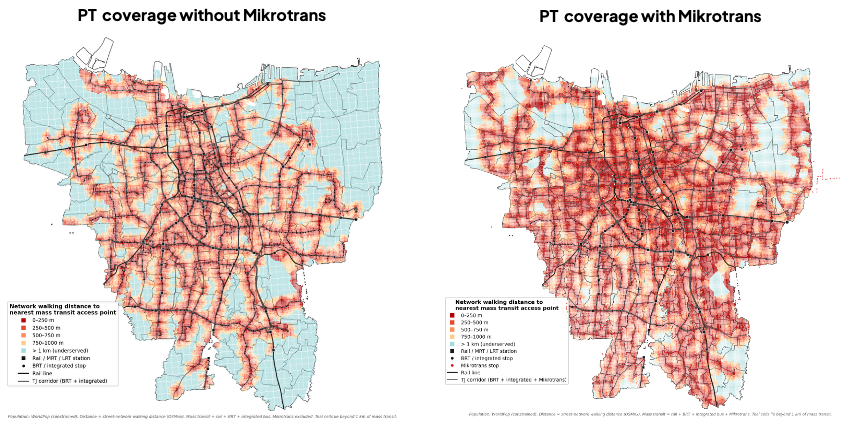
Sumber: Analisis penulis, 2026
Jakarta dengan segala keunggulan infrastrukturnya, masih belum bisa memastikan akses terhadap transportasi yang merata, bagaimana dengan kota lain di Indonesia yang bahkan belum memiliki fondasi yang sama? Dan ini baru bicara soal siapa yang terlayani. Belum bicara soal siapa yang aman.
Merdeka bergerak, tapi untuk siapa?
Ada kelompok-kelompok warga yang kemerdekaannya dalam bermobilitas bahkan lebih terbatas lagi, bukan hanya karena faktor ekonomi, tapi karena sistem yang ada memang tidak pernah dirancang dengan mereka sejak dalam pikiran.
Penyandang disabilitas menghadapi infrastruktur yang secara sistematis mengabaikan kebutuhan mereka, dari trotoar yang tidak bisa dilalui kursi roda, hingga desain kendaraan yang tidak mengakomodasi berbagai jenis disabilitas. Hak bergerak yang tertulis di atas kertas, dalam praktiknya tidak pernah benar-benar sama.
Lalu perempuan. Penelitian konsisten menunjukkan bahwa perempuan menghadapi risiko pelecehan yang jauh lebih tinggi di transportasi umum dibandingkan laki-laki[9]. Yang lebih mengkhawatirkan, studi juga menemukan bahwa perempuan membatasi pergerakannya bukan hanya karena sudah pernah mengalami pelecehan, tapi karena mengantisipasi kemungkinannya[10]. Ketakutan ini sudah cukup untuk mempersempit radius hidup perempuan. Bukti bahwa, sistem yang minimal ini saja belum aman bagi semua kelompok warga.
Respons kebijakan yang ada, seperti gerbong khusus perempuan di layanan transportasi berbasis rel dan ruang khusus perempuan di transportasi berbasis jalan memang memberi rasa aman namun hanya untuk jangka pendek. Selama kapasitas angkutan umum masih jauh di bawah permintaan, selama penegakan hukum bagi pelaku masih lemah, dan selama desain ruang publik masih mengabaikan perspektif gender, masalah ini tidak akan pernah selesai dari akarnya.
Bukan pesimisme, tapi tuntutan
81 tahun adalah waktu yang panjang, dan tidak adil untuk mengabaikan sejauh apa kita sudah melangkah. Investasi infrastruktur transportasi dalam satu dekade terakhir nyata hasilnya, setidaknya di sebagian kota besar.
Tapi pembangunan transportasi di Indonesia masih terlalu sering diukur dari hal yang terlihat: berapa kilometer jalan tol dibangun, berapa stasiun beroperasi, berapa rute diluncurkan. Bukan dari pertanyaan yang lebih mendasar dan lebih jujur: siapa yang terlayani, dan siapa yang masih tertinggal?
Kemerdekaan bermobilitas seharusnya bukan privilege kelompok tertentu yang kebetulan tinggal di tempat yang terlayani, atau yang punya cukup uang untuk membeli kendaraan sendiri. Ia adalah hak seluruh warga negara, dan selama ia belum merata, maka kemerdekaan itu belum utuh.
81 tahun merdeka. Sudah saatnya kita mulai mengukur kemerdekaan itu bukan hanya dari benderanya yang berkibar, juga dari seberapa bebas setiap warganya bisa bergerak.
Kharisma Adyaksa is a first-year master’s student in Urban Engineering at the University of Tokyo and an ADB-JSP scholar. Before starting his master’s, he spent five years at Bappenas as an urban transport expert, working across policy, programs, and projects for urban transport development in Indonesia.
Referensi
[1] Lucas, K. (2012). Transport and social exclusion: Where are we now? Transport Policy, 20, 105–113. https://doi.org/10.1016/j.tranpol.2012.01.013
[2] https://www.dw.com/id/biaya-transportasi-di-ri-lampaui-batas-ideal-dunia/a-73873150
[4] ITDP. (2025). Implementation of Electronic Road Pricing (ERP)/ Jalan Berbayar Elektronik (JBE) System in Jakarta. https://itdp-indonesia.org/publication/penerapan-sistem-electronic-road-pricing-erp-jalan-berbayar-elektronik-jbe-di-jakarta/
[5] Pishue, B., & Kidd, J. (2025). 2024 INRIX Global Traffic Scorecard. INRIX Research. https://inrix.com/scorecard
[6] Kompas.id. (2025). Public transportation services for residents’ welfare. https://www.kompas.id/artikel/en-layanan-transportasi-publik-untuk-kesejahteraan-warga
[7] IQAir. (2025). 2024 World Air Quality Report. IQAir. https://www.iqair.com/world-air-quality-report
[8] C40 Cities. (2023). How Jakarta integrated informal microbuses into the public transportation network. C40 Knowledge Hub. https://www.c40knowledgehub.org/s/article/How-Jakarta-integrated-informal-microbuses-into-the-public-transportation-network
[9] Tiznado-Aitken, I., Guerrero B., T. E., & Sagaris, L. (2024). Uncovering gender-based violence and harassment in public transport: Lessons for spatial and transport justice. Journal of Transport Geography, 114, 103766. https://doi.org/10.1016/j.jtrangeo.2023.103766
[10] Useche, S. A., Colomer, N., Alonso, F., & Faus, M. (2024a). Invasion of privacy or structural violence? Harassment against women in public transport environments: A systematic review. PLOS ONE, 19(2), e0296830. https://doi.org/10.1371/journal.pone.0296830